
Calisthenics · Updated 2026-09-16
How to Start Calisthenics: From Zero to Your First Real Workout
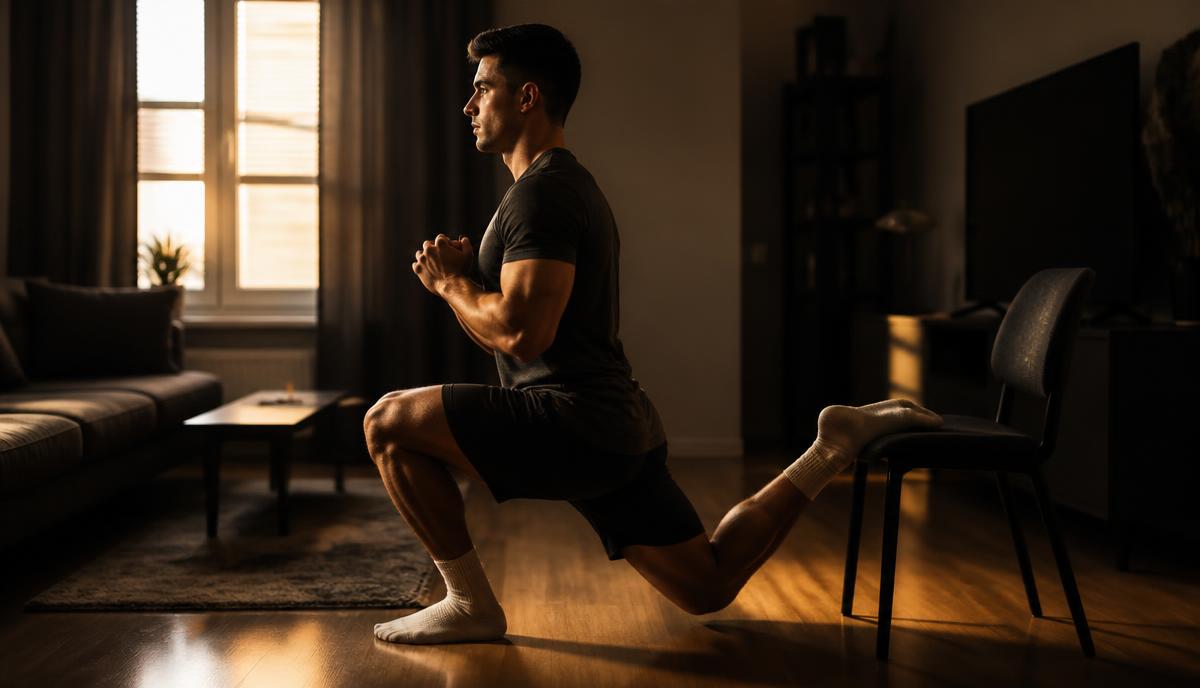
To start calisthenics: (1) test your baseline — how many push-ups, squats and dead hang seconds can you do; (2) learn the five basic movements — squat, push-up, row, plank and glute bridge; (3) train 3 days per week, leaving a rest day between sessions; (4) progress by adding reps, then harder variations; (5) add a pull-up bar once the basics feel solid. You need no gym, no equipment and no experience — just a floor and consistency.
Step 1: find your starting point
Before your first workout, spend ten minutes testing: maximum push-ups (knees count — note which version), maximum squats with good form, and how long you can hang from a bar or door frame. Write the numbers down. This is your baseline, and in four weeks it's the proof that the training works.
Step 2: learn the five basic movements
- 01Squat — feet shoulder-width, sit back and down, stand up fully.
- 02Push-up — body in one line, chest toward the floor, elbows at 45°. Scale to wall or incline versions.
- 03Row — under a sturdy table, pull your chest to the edge.
- 04Plank — straight line from head to heels, squeeze glutes.
- 05Glute bridge — drive hips up, squeeze at the top.
Step 3: your weekly schedule
| Day | What you do |
|---|---|
| Mon | Full-body basics: 3 sets of each movement |
| Tue | Rest or a 20-30 minute walk |
| Wed | Full-body basics |
| Thu | Rest |
| Fri | Full-body basics + a short skill play session (hangs, balance) |
| Weekend | Rest, walk, or something active you enjoy |
Step 4 and 5: progress and add equipment
Progression has two gears: first more reps, then harder variations. When 3×12 of an exercise feels controlled, move up the ladder — incline push-up becomes full push-up, squat becomes split squat. Only buy equipment when the floor has been mastered: a doorway pull-up bar costs little and unlocks the entire pulling world.
The last piece is tracking. Note sets, reps and how each session felt. After four weeks, retest your baseline numbers — seeing them move is what turns training from an experiment into a habit.
How the app helps you with this
Frequently asked questions
Can I start calisthenics with no equipment at all?
Yes. Squats, push-up variations, rows under a table, planks and glute bridges cover a complete full-body program. A pull-up bar is the first — and for a long time only — purchase worth making.
How often should a complete beginner train calisthenics?
Three sessions per week with a rest day between them. That frequency gives enough stimulus to progress and enough recovery to stay injury-free.
Am I too out of shape to start calisthenics?
No — every movement has an easier version. Wall push-ups, chair squats and knee planks are real training, not cheating. Start where your body is today and scale up week by week.
Keep reading
Want the plan adapted to you?
Calisthenics.dk rebuilds the programme around your level, counts your reps through the camera and corrects your form as you go — all on your own phone.