Calisthenics · Updated 2026-09-15
What is calisthenics? The complete guide to bodyweight training
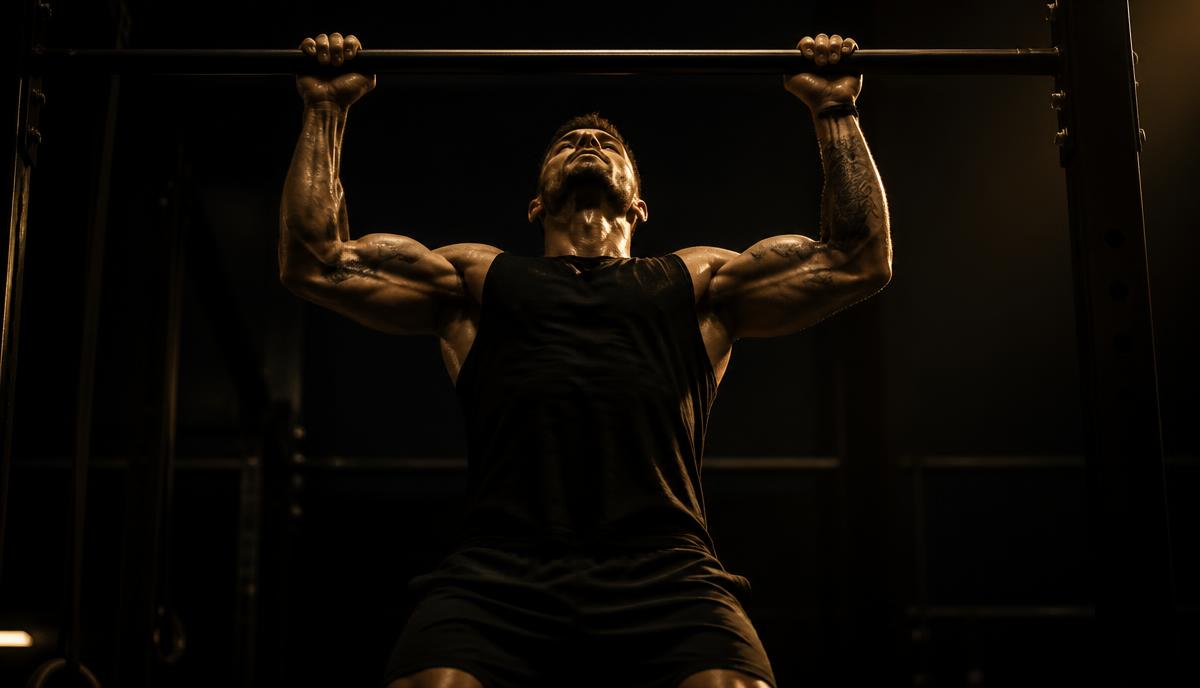
Calisthenics is strength training that uses your own bodyweight as resistance — pull-ups, dips, push-ups, squats and hanging core work. Instead of adding weight to a bar, you make the exercise harder by moving to a tougher variation. It needs almost no equipment, it builds strength, control and mobility at the same time, and you can start today with a bar and a floor.
Want a plan built for your level?
Skip the generic templates. Get a personal training plan built by the AI coach, and let your phone camera count your reps and score your form in real time.
- A personal plan that adapts as you progress
- The camera counts reps and gives you a form score
- Full access to the whole app during the trial
Cancel anytime in one click.
See plans and pricingThe definition: strength with your own body
Calisthenics is training where the resistance is your own body. The word is Greek: kallos (beauty) and sthenos (strength). In practice it covers everything from your first push-up to a planche.
The difference from conventional weight training is how you add difficulty. In a gym you add five kilos to the bar. In calisthenics you change hand position, leverage or how much of your body you lift. A push-up becomes an archer push-up, becomes a one-arm push-up. Same movement, far more demanding.
The five movement patterns
Everything in calisthenics reduces to five patterns. Hit all of them every week and you have a complete program, at any level.
| Pattern | Beginner | Next step | Goal |
|---|---|---|---|
| Vertical pull | Australian row | Assisted pull-up | Strict pull-up |
| Vertical press | Pike push-up | Elevated pike push-up | Handstand push-up |
| Horizontal press | Knee push-up | Full push-up | Archer push-up |
| Legs | Bodyweight squat | Bulgarian split squat | Pistol squat |
| Core | Plank | Hollow hold | L-sit |
Why bodyweight training works
Research is clear on the point that matters: muscle growth depends on training close to failure with enough volume — not on whether the resistance comes from a barbell or your own body.
- 01You train whole chains of muscle at once, which produces strength you can actually use
- 02Joints and tendons load gradually, because progression happens in small steps
- 03You get mobility and balance for free, because you have to stabilise yourself
- 04No membership, no commute, no queue for a machine
- 05The goals are concrete: your first pull-up, your first muscle-up, your first ten-second L-sit
What you need to start
Honest answer: almost nothing. A pull-up bar and a floor cover 90% of it.
- 01Pull-up bar for a doorway or wall — the single most valuable purchase
- 02A set of resistance bands — makes your first pull-ups possible
- 03Parallettes — saves your wrists on push-ups, dips and L-sits
- 04Gymnastic rings — the most versatile thing you can buy if you have somewhere to hang them
How long until you see results?
Training three to four times a week, most people feel better control within two weeks, see a clear strength difference in four to six weeks, and get their first strict pull-up within eight to twelve weeks starting from zero.
What decides it is not the program. It is showing up, and actually making the exercises harder over time.
How Calisthenics.dk helps
The app gives you a plan matched to your level, a skill tree that maps the road to muscle-up and planche, and a camera-based form analyser that counts your reps and flags when depth or range slips. The analysis runs locally on your phone — no video leaves the device.
How the app helps you with this
Frequently asked questions
Is calisthenics the same as bodyweight training?
Largely yes. Calisthenics usually implies the skill side of it too — working toward muscle-up, front lever and planche, not just general bodyweight conditioning.
Can you build real muscle with calisthenics?
Yes. Growth comes from enough volume taken close to failure. With progressive variations, bodyweight work can build as much upper-body mass as free weights. Legs need more creativity because they are already strong.
Is calisthenics good for beginners?
It is one of the best entry points, because every exercise has an easier version. Can't do a pull-up? Do australian rows. Can't do a push-up? Do them against a table.
How often should you train?
Three to four times a week suits most people. Skill work like handstands tolerates daily practice because it is technical rather than exhausting.
Keep reading
Want the plan adapted to you?
Calisthenics.dk rebuilds the programme around your level, counts your reps through the camera and corrects your form as you go — all on your own phone.
Cancel anytime in one click.